
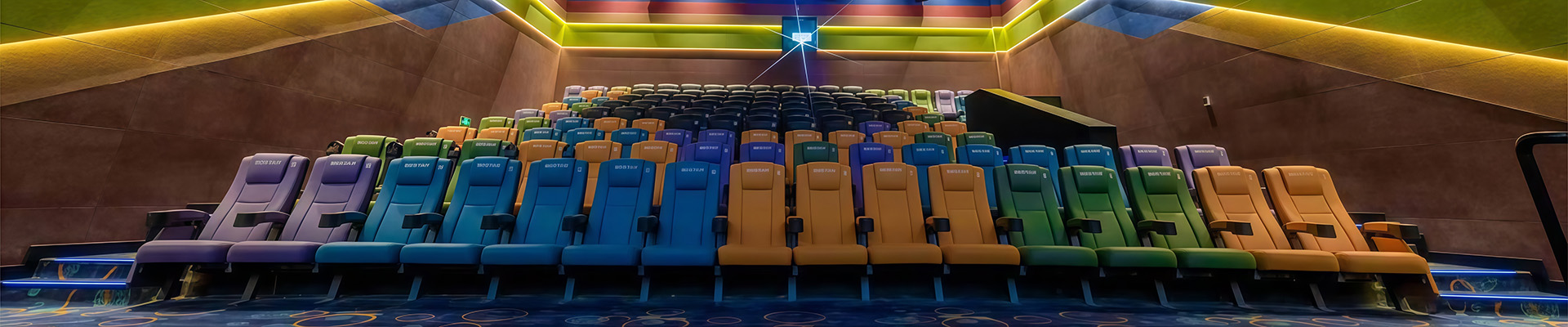
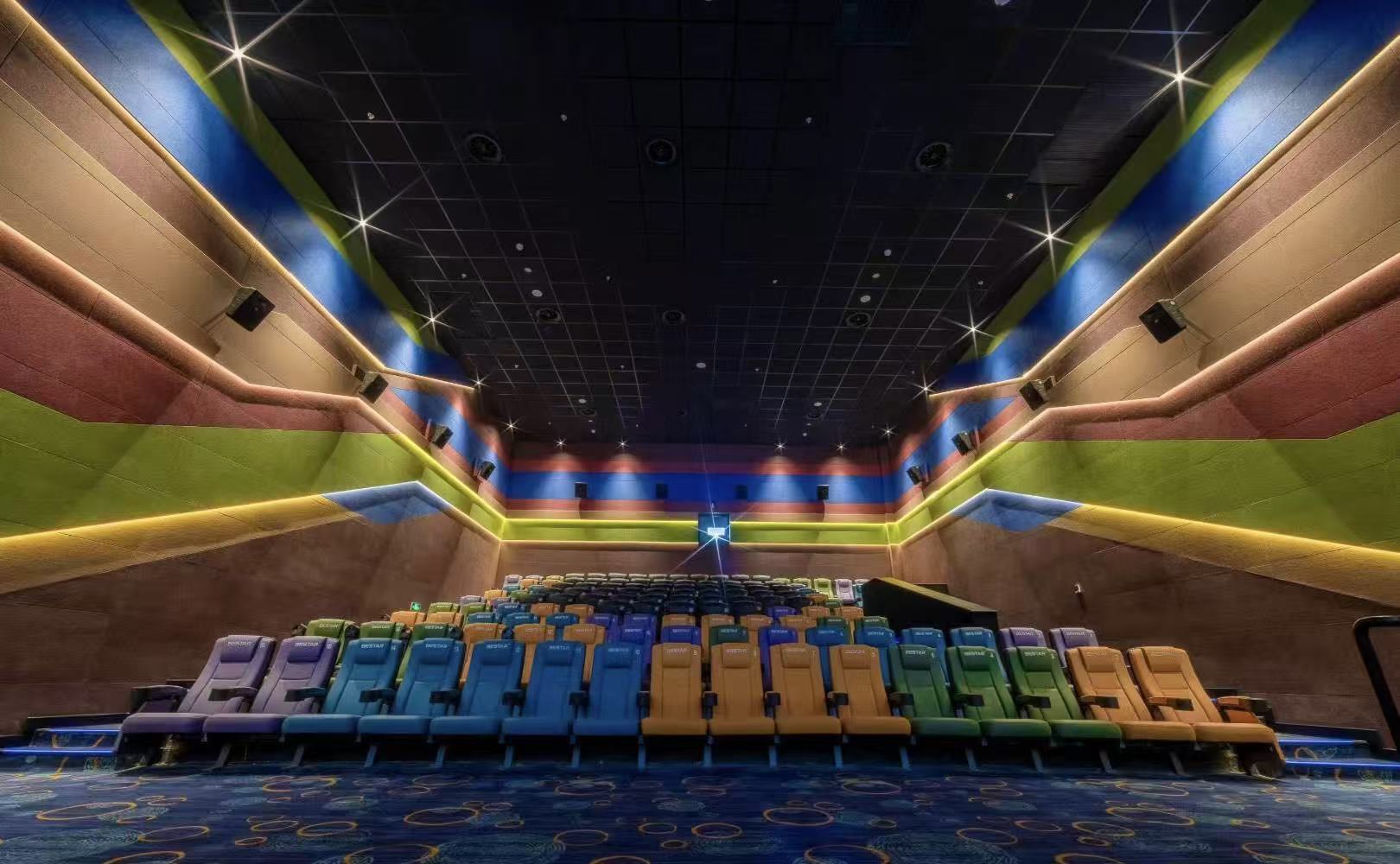
A movie is never just five minutes. In most modern cinemas, audiences sit continuously for two to three hours—and for special screenings, festivals, or double features, even longer. During that time, the seat shapes the experience in a quiet but decisive way: do viewers relax and stay immersed, or do they spend the second half fidgeting, stretching, changing posture, and waiting for the credits?
For cinema operators, that “silent discomfort” eventually turns into very real business problems: more complaints, lower repeat visits, weaker justification for premium ticket tiers, faster seat sagging and deformation, more squeaks and mechanical noise, quicker visual aging—and rising maintenance costs.
That’s why “ergonomic cinema chairs” is no longer just a nice-sounding marketing angle. It has become a core keyword many buyers actively search and compare. At the same time, “ergonomics” is also one of the most misused terms in the market. Many suppliers say “ergonomic” when they simply mean “softer cushions.” Many buyers accept “soft = comfortable” because comfort feels hard to quantify on a spec sheet.
The good news: in commercial cinema seating, comfort can be quantified and verified—if you know which indicators to look at.
This article breaks ergonomics down into decision-ready, specification-level components you can actually use: backrest curvature and lumbar geometry, seat cushion construction and foam density, quiet tip-up/recovery mechanisms, armrest and cup-holder micro-ergonomics, upholstery choices balancing breathability and cleanability, and layout variables like center-to-center spacing and row pitch. We’ll also connect these concepts to STARROAD SEATING’s cinema seating lineup and typical configurations (such as S1013L-5, S2588-2, CE2577, CE2522, CE2588), so you can map “ergonomics” directly to product structure—not vague adjectives.
If you’re already collecting quotes and comparing options, here’s a clear promise: after reading this, you’ll be able to evaluate “ergonomic cinema seating” like a professional buyer—by structure and performance, not by marketing language. And if you want a faster path, simply send us your hall dimensions, aisle plan, and target seat count. We’ll propose a layout + model recommendation so ergonomics remains true after installation, not only on a brochure.
Ergonomics in Cinema Seating Isn’t One Feature, it’s a System
When people source cinema seats, the first instinct is often “How thick is the cushion?” But comfort isn’t thickness. Comfort is the result of posture support, pressure distribution, micro-movement control, and the ability to stay relaxed for long periods without constant adjustment.
That’s why, in cinema seating, ergonomics is a system that usually solves five operational problems at the same time:
1) Posture stability through backrest profile and lumbar support.
A well-shaped backrest stabilizes the spine and shoulders so viewers don’t collapse into slouching, hunching, or shrugging halfway through a film.
2) Pressure management through seat base engineering.
Cushion structure (foam type/density, internal elastic support, springs/bands) spreads pressure points so viewers don’t get thigh numbness, tailbone pain, or “can’t sit still” fatigue.
3) Quiet, controlled motion through recovery systems.
Buffer recovery, damping structures, or gravity slow-return devices reduce impact and noise, preventing disruptive “clap” sounds or joint squeaks in quiet scenes.
4) Better high-frequency touchpoints.
Armrest height/width comfort, cup holder position that doesn’t fight elbow space, and side panels that protect the seat while remaining safe for users.
5) Comfort that survives installation through layout coordination.
Center distance and row spacing determine whether legroom and personal space actually exist once the seats are installed.
Many projects lose money precisely on point five: the chair itself may be fine, but the installation layout destroys comfort. Audiences won’t say, “The foam density is insufficient.” They’ll just say, “This cinema’s seats are uncomfortable.” If you want ergonomics to improve both experience and brand perception, you must treat seating as part of the hall system, not a standalone product.
Here’s the most practical action step (and the one that generates the best project outcomes): send your hall plan and target seat count. We’ll help you determine a more reasonable center distance and row pitch, then match the right seating type (standard cinema chairs, sofa-style cinema seating, or VIP function seating) so comfort still holds true after completion.
Backrest and Lumbar Geometry: The Difference Between “Sitting” and “Staying Comfortable”
Ergonomics shows up first in the backrest. Many cinema chairs look “thick,” but the back profile may be too flat, too upright, or too soft to provide real support. As a result, viewers start sliding forward, leaning sideways, bracing with armrests, tightening their shoulders, and constantly changing posture. Over two hours, minor discomfort accumulates into fatigue—and fatigue becomes dissatisfaction.
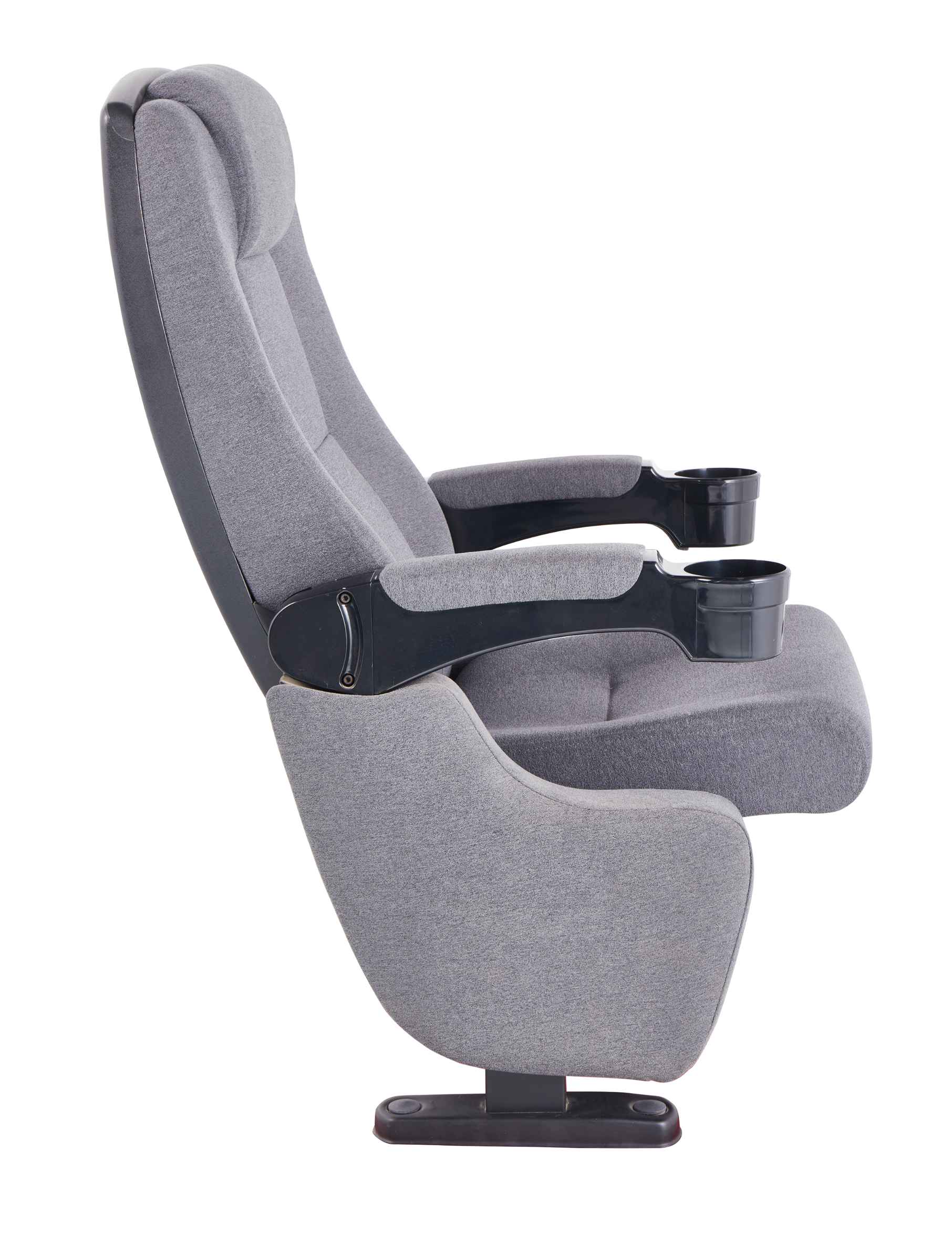
A stable design approach seen in STARROAD SEATING’s cinema chair development is this: a medium-height backrest combined with continuous back-and-lumbar support shaping, emphasizing geometry-driven support rather than using thickness to “fake comfort.” This kind of backrest stabilizes the torso while avoiding pushing the head forward (which increases neck and shoulder strain)—especially important in auditoriums where viewers look slightly upward at the screen.
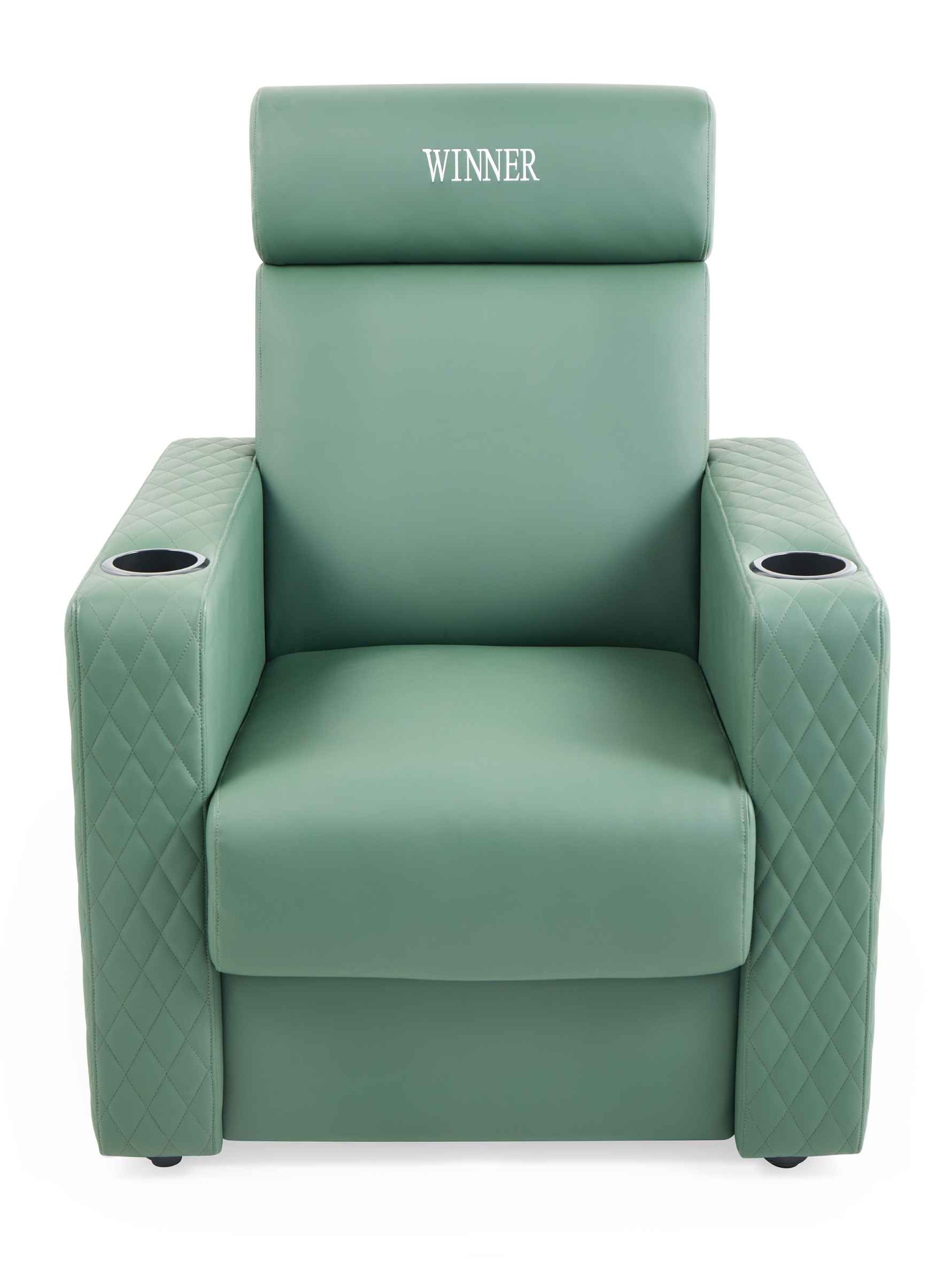
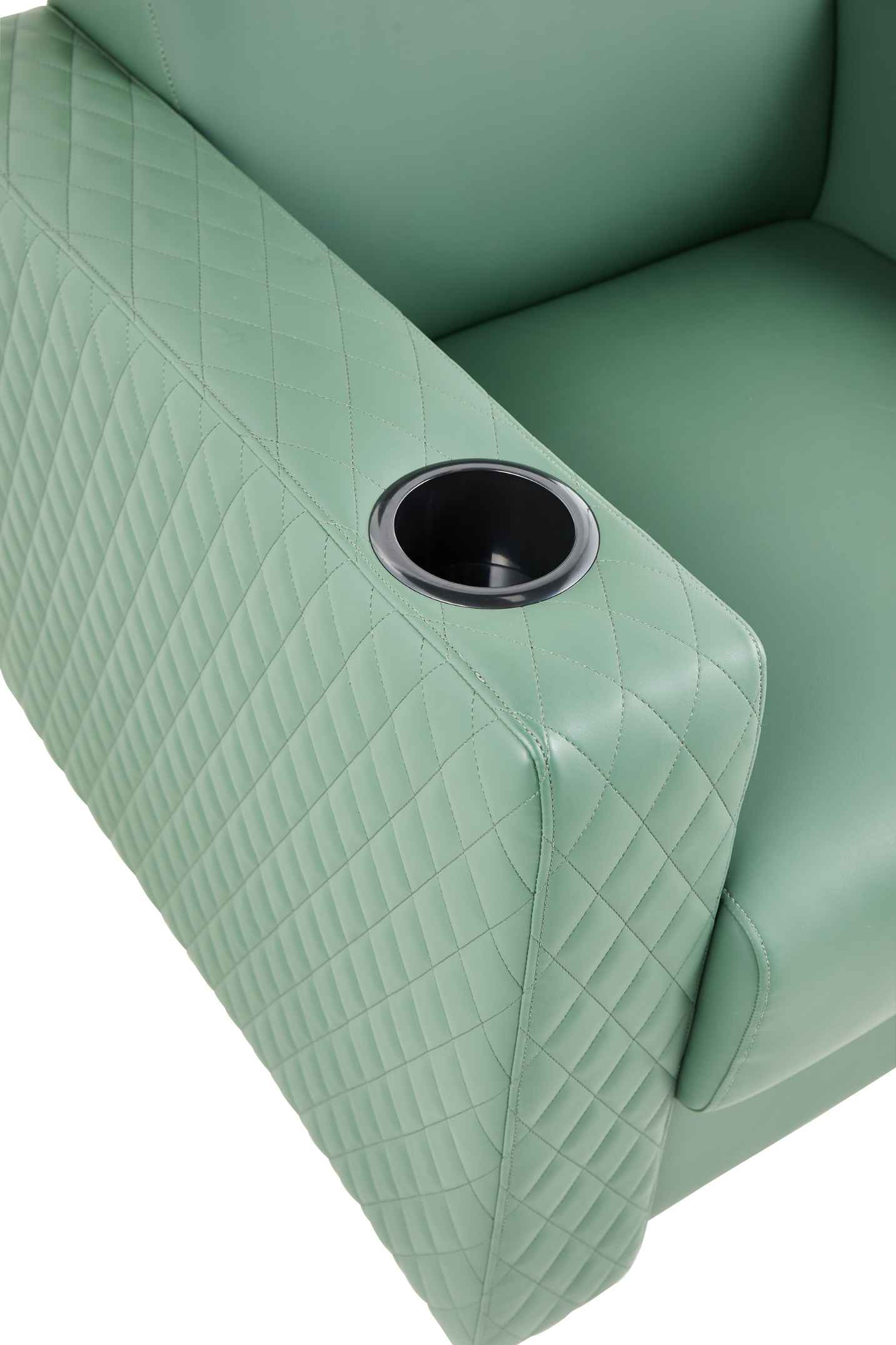
This matters even more in premium and high-end halls. Sofa-style models like CE2577 and CE2522 emphasize an instant “sink in and relax” feeling, but still rely on backrest and lumbar shaping to maintain long-duration comfort rather than letting viewers slump deeper and deeper. Many cinemas choose sofa-style seating for premium halls precisely because the comfort difference is noticeable the moment you sit down—making premium pricing easier to justify.
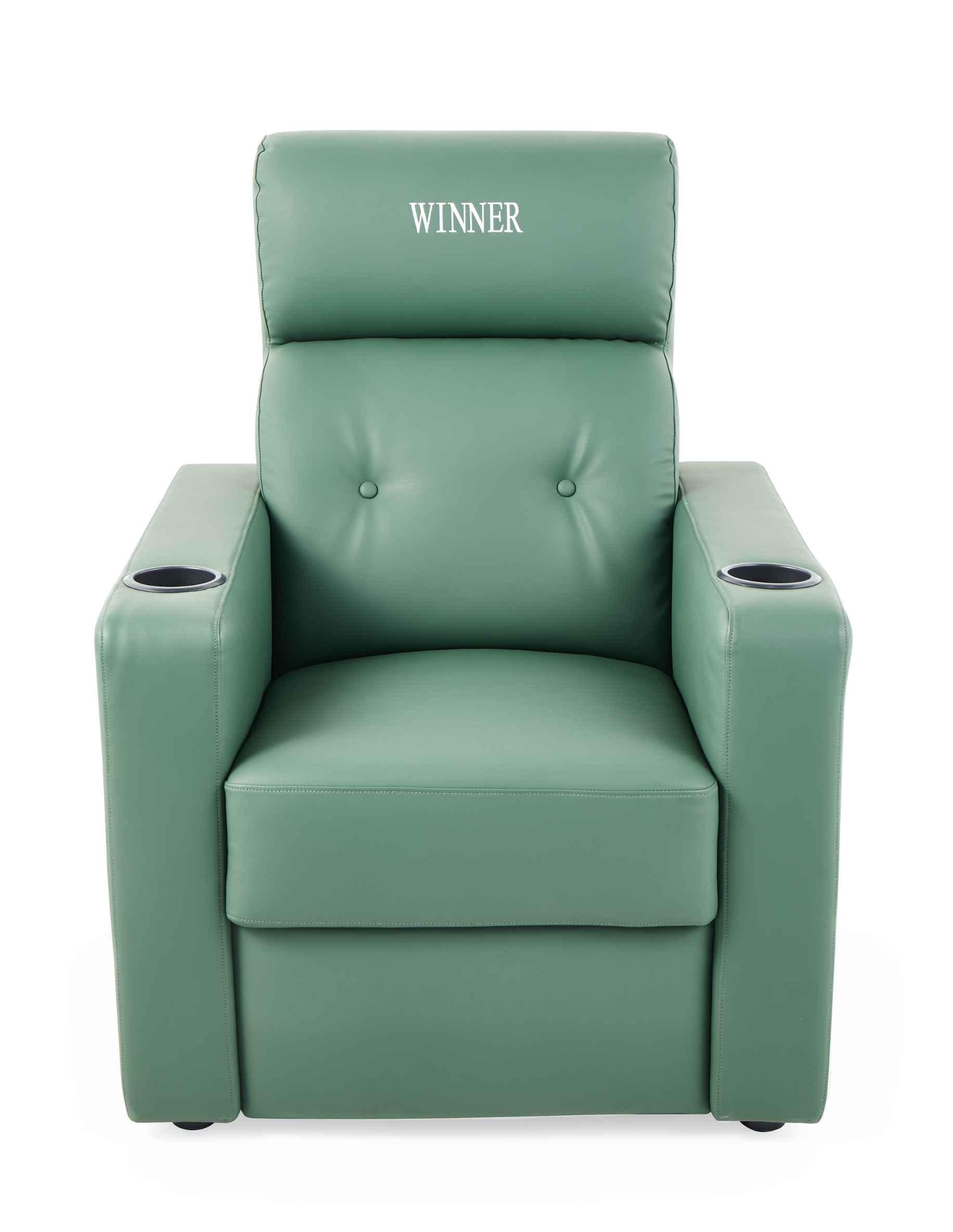
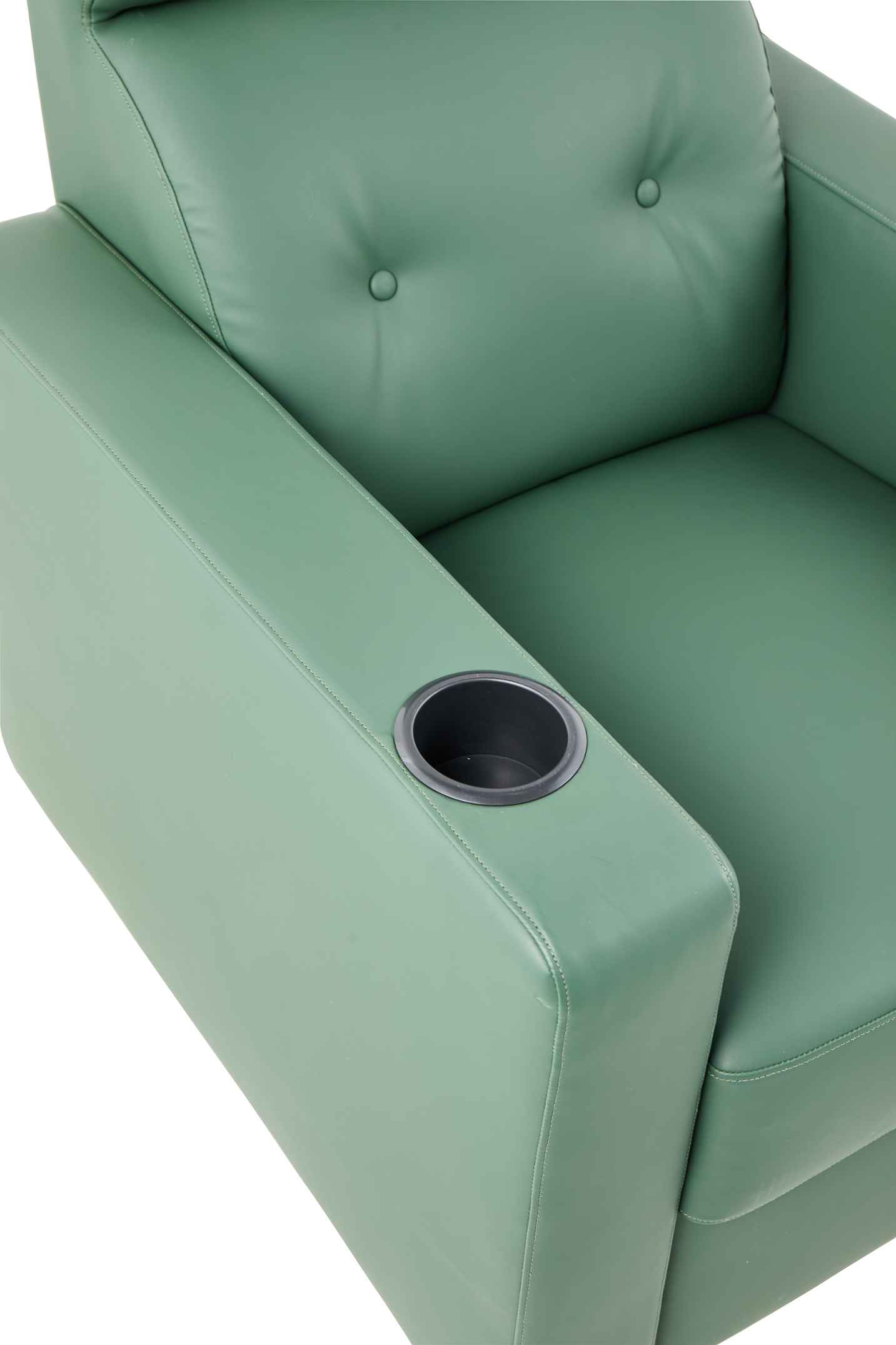
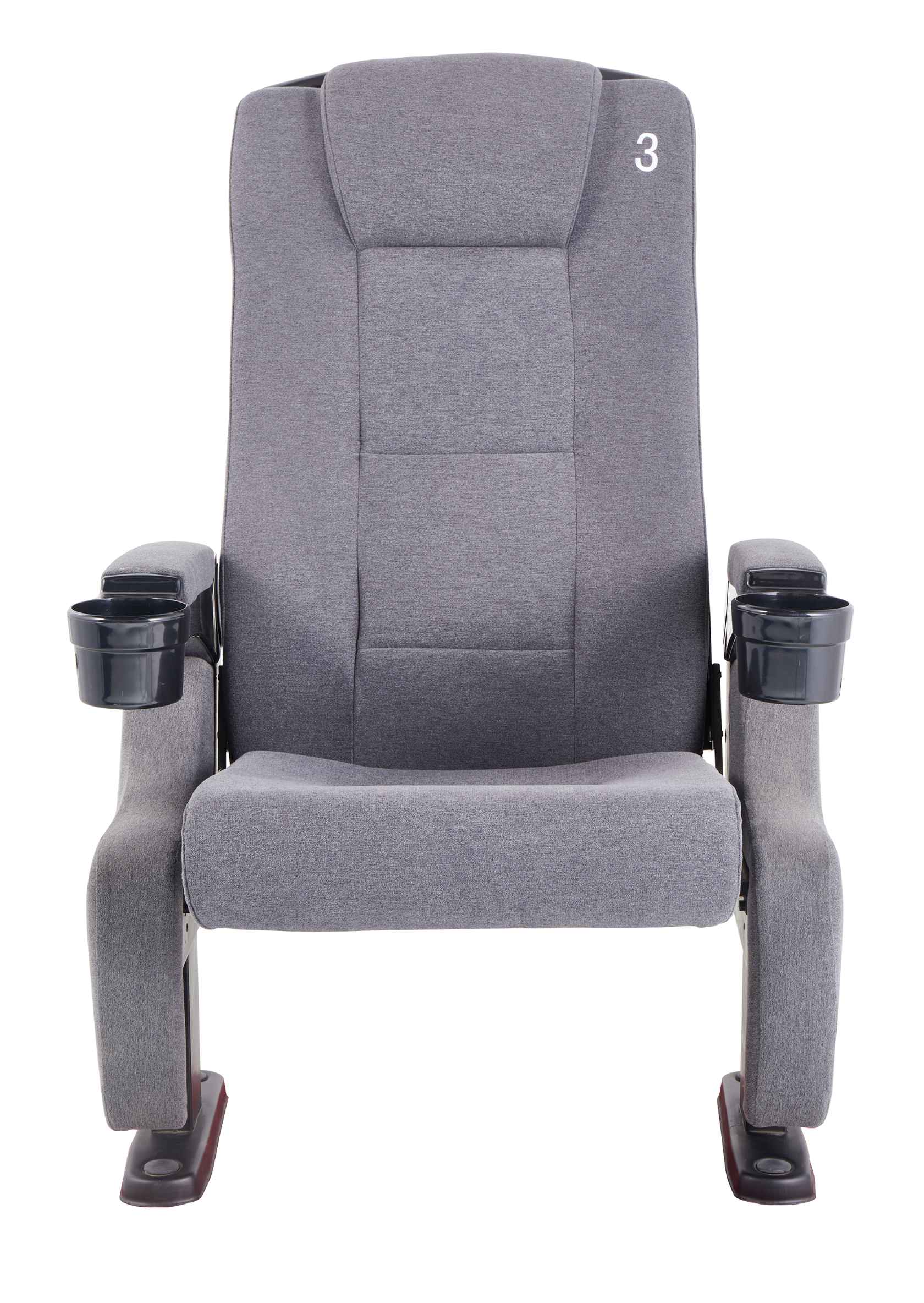
Standard fixed seating needs the same logic too. Models such as S1013L-5 and S2588-2 reduce long-sitting fatigue through ergonomic back shaping while maintaining controllable installation, cleaning, and high-frequency operational performance. In other words, no matter how the product form changes, the first principle remains: support posture first, then add softness as a complement—not the other way around.
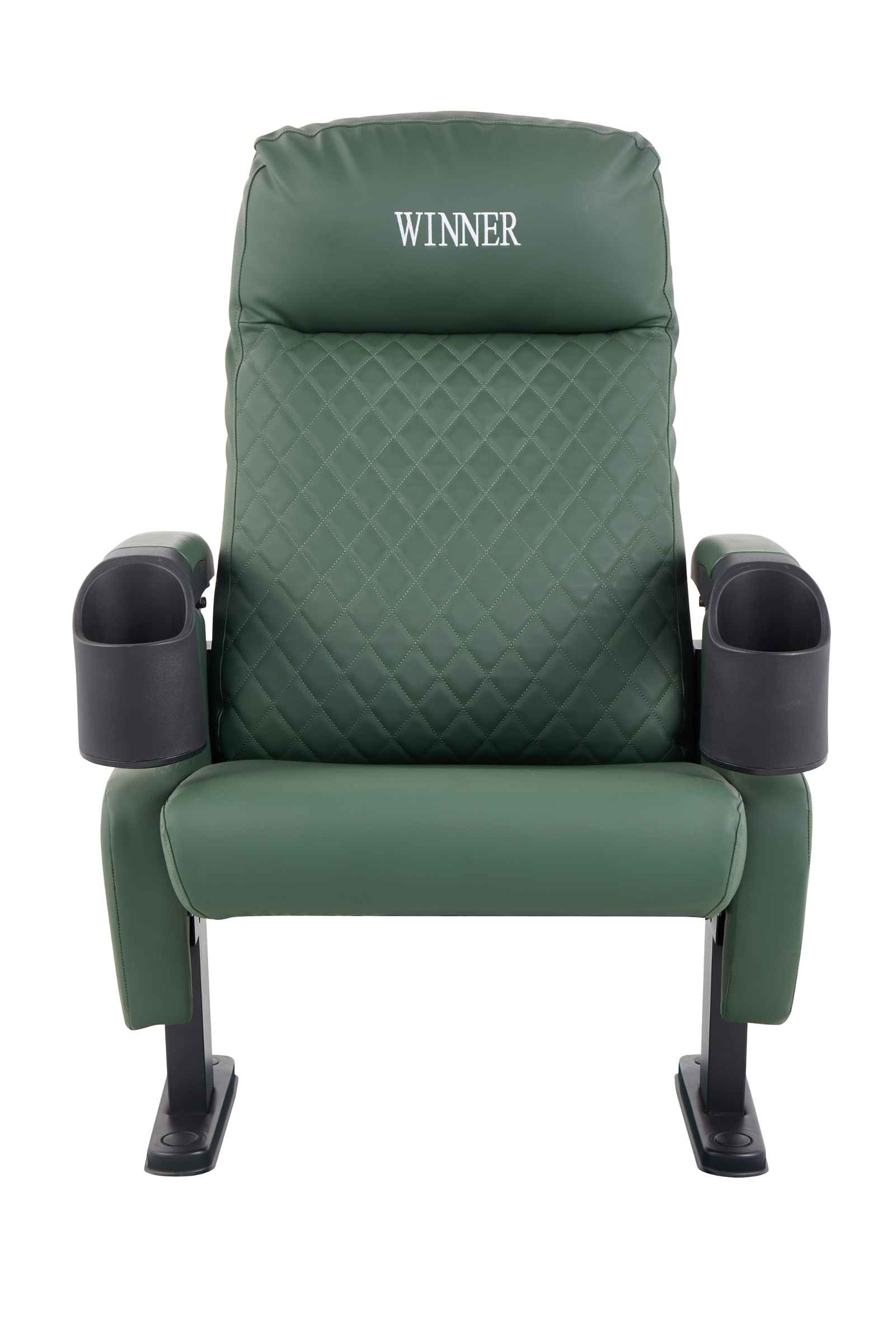
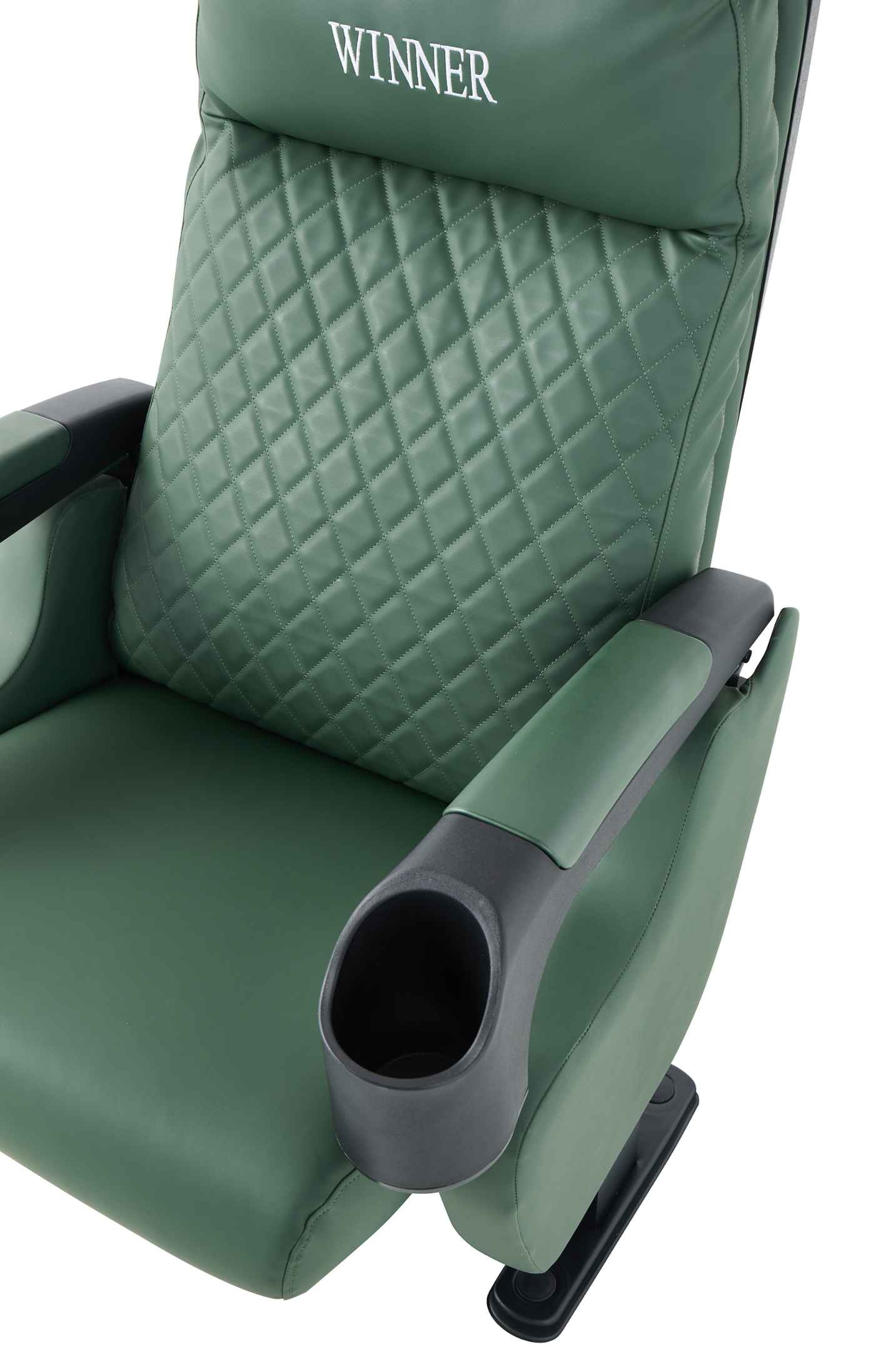
If you’re comparing suppliers, here’s a high-value buyer question: Is the backrest shape actually doing “work,” or is the seat only comfortable because it’s thick? Thickness compresses over time; geometry and support logic last. That’s the difference between “comfortable in month one” and “comfortable after years of use.”
If you want to decide faster, we can recommend whether you should prioritize capacity efficiency (standard ergonomic seating) or relaxation immersion (sofa-style premium seating) based on your hall type (standard/premium/VIP), audience profile, screening duration, and occupancy patterns—so you upgrade where it impacts revenue instead of blindly adding cost.
Seat Cushion Engineering: Foam Density and Process Decide Whether Comfort Survives Year Three
Backrests support posture; cushions manage pressure. Commercial cinema cushions face repeated compression every day, for years. Low-density foam often feels great at first because it compresses easily—giving a “soft” impression. But it typically loses resilience faster, leading to seat sagging, pressure concentration, tailbone pain, heavier thigh compression, and more frequent posture changes.
That’s why cushion specifications matter.
In STARROAD SEATING’s cinema chair system, a common durability approach is one-time molded polyurethane (PU) foaming, chosen for elasticity and long-term deformation resistance. For example, standard seating models like S1013L-5 and S2588-2 emphasize one-time molded cushioning and specify foam density at no less than 50kg/m³. This isn’t a “premium-sounding number.” In commercial seating, it’s a practical durability signal that correlates with whether foam can maintain supportive geometry over long-term real use.
In sofa-style seating, comfort may not rely on a single foam layer alone. Instead, it’s created through structural support elements that deliver a “soft but not collapsing” sitting feel. Using CE2577 (and similarly structured CE2522) as a reference example, the seat base can use a spring system and wide rubber band positioning to form a stable load-bearing foundation, then layer high-density sponge/foam on top. The key is that comfort comes from structure + materials combined, not simply from stacking softness.
Many buyers encounter this reality: “The sample feels comfortable.” The real difference appears between six months and two years—whether foam maintains support determines whether the seat becomes “more tiring the longer you sit.” That’s why cushion engineering is one of the strongest credibility anchors when you position ergonomics as professionalism: you’re not saying “we are comfortable,” you’re explaining why comfort remains.
If you want to avoid post-opening repairs and complaints, tell us your operational scenario: daily screening volume, turnover intensity, audience mix, and how often halls run near full capacity. We’ll recommend a cushion structure and model mix that fits: durability and stable recovery for standard halls; long-duration comfort for premium halls; lounge feel and experience-based premium pricing for VIP zones.
Quiet Comfort: Recovery Mechanisms and Damping Decide Whether “Comfort” Disrupts the Film
Ergonomics isn’t only physical. In cinemas, comfort also has an acoustic dimension. If a seat makes noticeable noise when tipping up or returning, viewers get pulled out of the film—especially in quiet scenes, thrillers, art-house screenings, or premium halls. Seat noise is a classic problem that audiences struggle to describe, but it strongly impacts perceived quality: they may not know why, but they feel the venue is “not premium.”
That’s why the recovery system matters. Many STARROAD SEATING cinema chair designs emphasize buffer recovery through spring and damping structures, producing smoother and quieter return behavior. Some structures also use internal gravity slow automatic return devices, returning the seat to its original position after a viewer leaves—reducing noise and preventing seats from being left down in aisles.
For operators, this is both experience and efficiency: automatic return keeps aisles cleaner, speeds up cleaning, and improves safety in low-light environments. For premium halls, quiet return is often an “invisible but essential” quality indicator—customers feel the refinement without ever naming it.
If you’re building a premium hall, treat quiet recovery as a baseline requirement, not an optional upgrade. It’s easy to overlook, but it protects premium perception long-term. Share your needs—slow return vs faster return, automatic return or not, noise sensitivity—and we’ll recommend the right model and mechanism combination.
Armrests, Cup Holders, and “Micro-Ergonomics”: The Details That Trigger Immediate Satisfaction
Ask any cinema operator what audiences interact with most, and the answer is rarely “lumbar support.” It’s armrests and cup holders. These touchpoints shape every minute of the experience: elbow comfort, drink stability, whether the armrest feels cramped, whether cup holders steal personal space. Often, a viewer’s gut-level judgment of “comfortable or not” comes from these small details.
In STARROAD SEATING’s cinema chair system, armrests commonly use durable materials such as ABS injection-molded parts, and cup holders are integrated into the armrest structure for both tactile quality and durability. Cup holder size is often specified because it determines whether the cup holder is truly usable. In standard seat models, you may see cup holder sizes in the ~109mm to ~115mm range; in premium VIP/couple seating, cup holders may be larger to accommodate bigger drinks and snack combos.
For sofa-style and premium halls, armrest material and feel often get upgraded. Models like CE2577 and CE2522 may combine wood-finish armrests with integrated cup holders to balance “premium touch” with maintainability. In more experience-upgrade models like CE2588, cup holder capacity and added comfort/function can be more pronounced—so viewers feel the difference the moment they sit down.
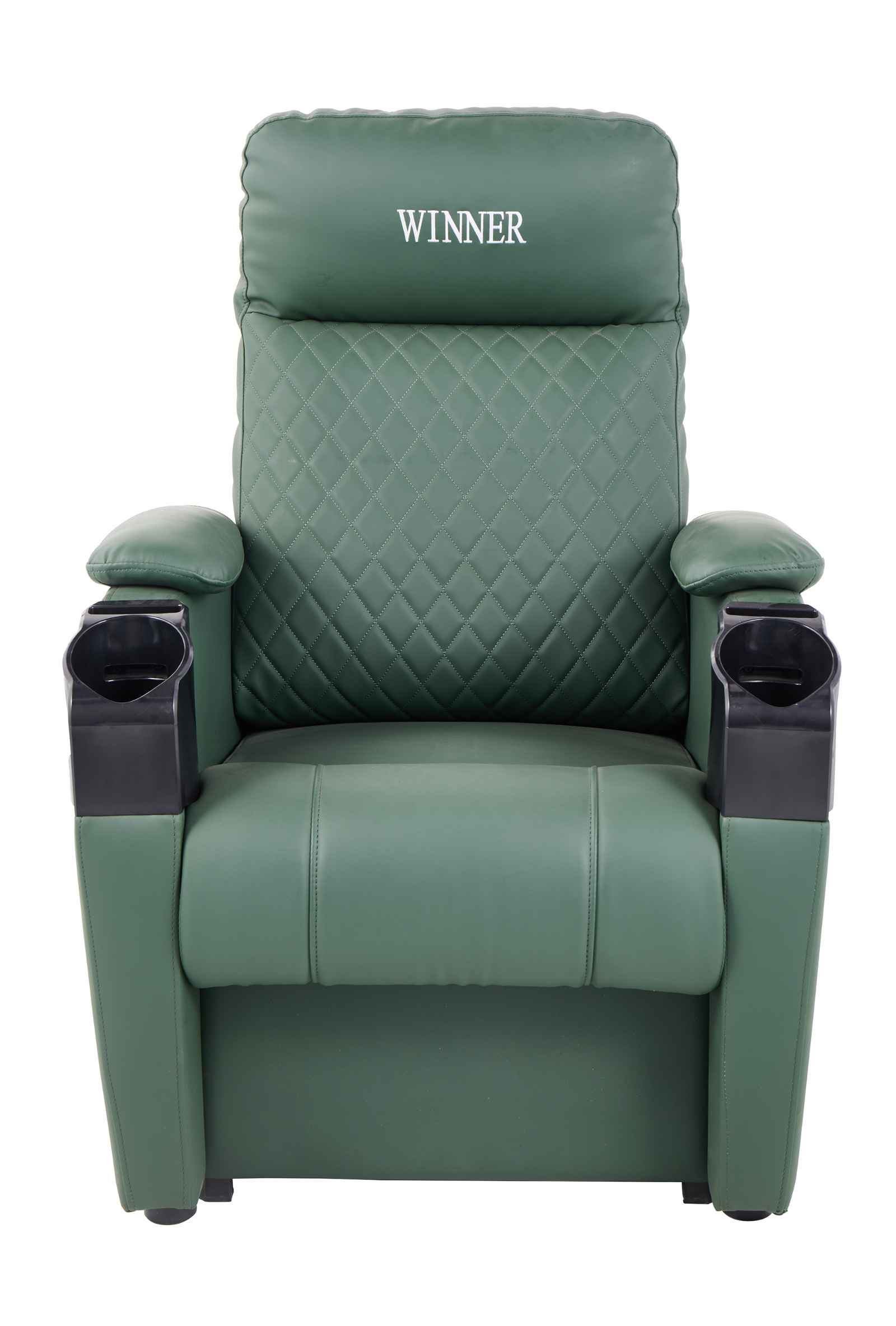
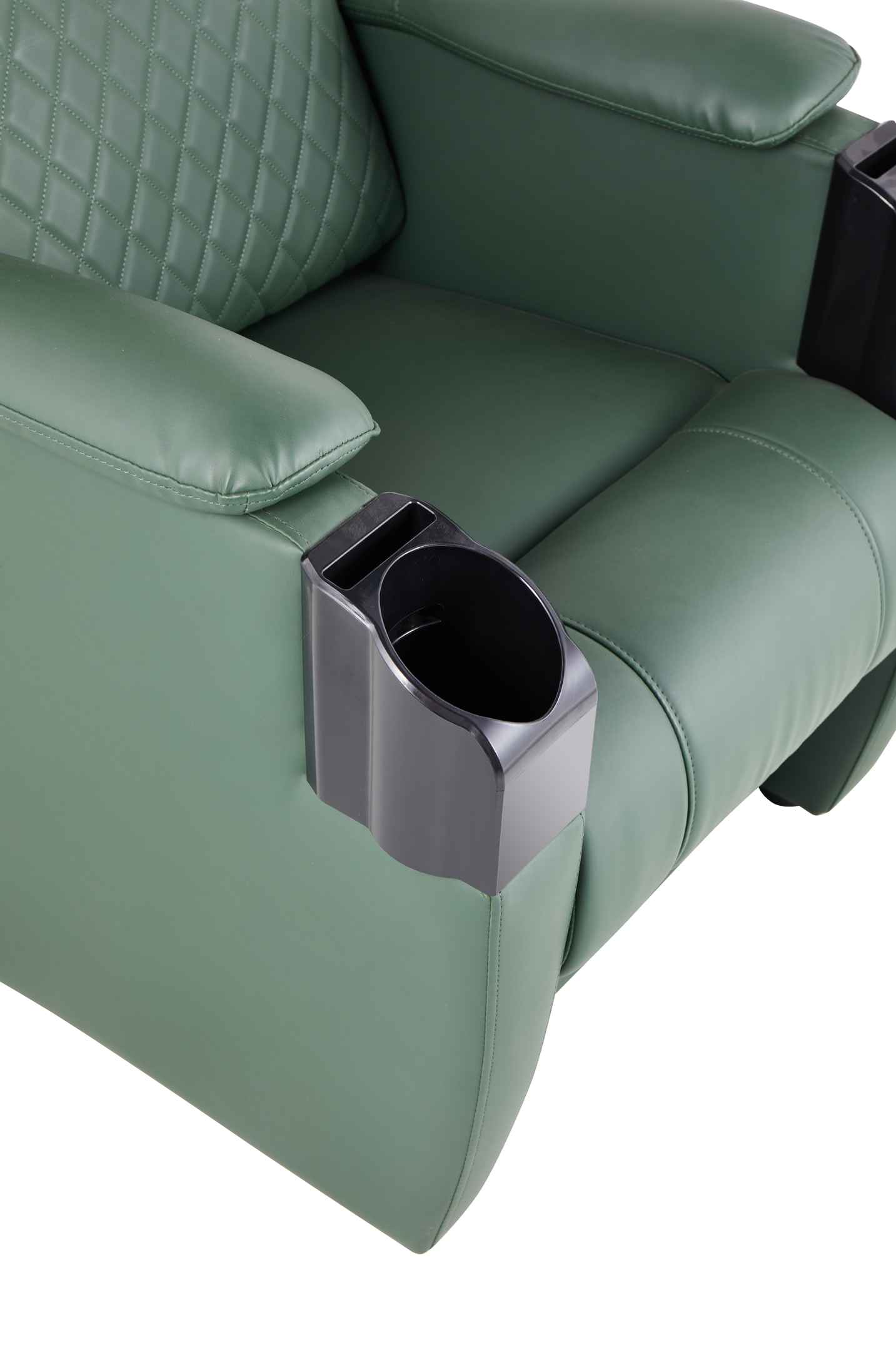
When you build an ergonomics story on your website, micro-ergonomics is one of the strongest conversion drivers because it’s visual, relatable, and naturally leads to inquiries: “What cup holder size should we choose?” “Will armrests feel narrow?” “What configuration is best for couple seating?” These questions move readers from browsing to requesting details—exactly what you want.
Side Panels and Guard Plates: Not “Classic Ergonomics,” But Critical to Whether Seats Look Old
Many buyers don’t ask about side panels until after the project is installed—when they realize the sides wear out fastest: shoe scuffs, bag impacts, cleaning equipment scratches, day after day. Once side edges break or age badly, the entire hall looks older. In commercial spaces, “looking old” directly reduces perceived value—especially in higher-priced halls.
That’s why many cinema chairs use impact-resistant, anti-aging molded guard plates for side protection. STARROAD SEATING’s design logic often highlights PP injection-molded side guards for durability and anti-aging performance. This isn’t “posture ergonomics,” but it is life-cycle ergonomics: whether the seat continues to “perform well” over long-term operation.
If your project is high-turnover, or your city’s cleaning intensity is high, these durability details can significantly affect maintenance cost and long-term visual quality. Tell us your expected traffic and cleaning routine, and we can recommend the right materials and protective configurations to avoid the “whole hall looks old in two years” problem.
Upholstery and Surface Materials: Balancing Breathability, Acoustic Feel, and Cleaning Reality
Cushion structure defines support; surface materials define daily experience. In cinemas, surface materials influence comfort, cleaning effort, and even the audience’s perception of the space as “quiet” or “soft.”
Breathable fabric upholstery can feel less stuffy during long sitting and can help create a softer acoustic impression—but it requires more careful cleaning processes. Stain-resistant, wear-resistant PU surfaces are often better for snack-and-drink-heavy venues and high-frequency cleaning, helping maintain a long-term “clean look.” For premium positioning, higher-grade leather options with protective treatments can meet both tactile and visual premium expectations.
The best choice is rarely “one material for the whole venue.” Instead, choose based on operational zoning: balanced materials for standard halls; easier-to-maintain surfaces for high-consumption zones; premium tactile upgrades for VIP seating. If you share your operation scenario—food and beverage intensity, cleaning frequency, traffic patterns—we can recommend a realistic material and configuration plan, not a “looks good, choose it” decision.
Layout Ergonomics: Center Distance and Row Pitch Are Part of Comfort—and Part of Revenue
Even the best seat can feel uncomfortable in a bad layout. What determines whether people feel cramped or can stretch their legs is mostly center distance and row spacing. Tight rows remove legroom; narrow centers remove shoulder space; overly wide centers reduce total seat count and directly impact revenue.
Professional cinema seating planning is never just “pack in seats.” It treats comfort and capacity as two variables on the same spreadsheet, while also respecting aisle, egress, and safety requirements. STARROAD SEATING models provide center distance and row spacing parameters so you can make realistic layout decisions.
From standard seating to sofa-style seating, center distance and row pitch ranges differ significantly. Standard seating supports higher capacity efficiency; sofa-style seating often needs larger row spacing and wider centers to deliver a truly premium feel. VIP/couple seating can demand even more personal space and experience differentiation.
When you position ergonomics as professionalism on your website, layout is your strongest “solution capability” proof. You’re not just saying “our seats are comfortable”; you’re saying, “we can help you get the hall layout right so comfort doesn’t collapse due to space compression.” That message improves conversion because it gives buyers a clear reason to contact you: layout decisions are difficult—and you can help.
If you want to move faster, send your plan and target seat count. We can provide comparison options: a standard hall scheme, a premium hall scheme, and a VIP zoning scheme—so you can choose the best balance for your business model.
Quick Summary: Turning Ergonomics Into “Procurement Language” in One Article
If you only remember three points:
- Ergonomics is not “softer.” It’s a system made up of back/lumbar geometry, cushion engineering, quiet recovery, touchpoint details, and layout parameters.
- Don’t use one logic for standard, premium, and VIP halls. Segment by revenue structure: efficiency and durability for standard halls; space and tactile quality for premium halls; differentiation and premium pricing for VIP zones.
- The best way to avoid mistakes isn’t “looking at photos”—it’s writing ergonomics into your RFQ: foam density, return mechanism, center/row requirements, cup holder parameters, side panel durability, and anti-rust steel structure. Clear parameters = comparable quotes and stable delivery.
If you want to turn these conclusions into project decisions, send your plan and target seat count to STARROAD SEATING. We’ll propose seating and layout options using the same parameter system—helping you decide faster and deliver more reliably.
FAQ
1) Should I choose the seat model first, or plan layout first (row pitch/center distance/seat count)?
Start with layout goals: target seat count, aisle/egress rules, and your zoning strategy (standard/premium/VIP). Many comfort problems come from row pitch being too tight—not from the chair itself. With your plan and seat-count target, we can run 2–3 seat-count comparisons and then recommend the best-fit model mix.
2) Why do samples feel comfortable, but after installation people complain?
Because sample tests ignore layout reality. In the hall, row pitch and center distance stack with armrest/cup-holder space to define personal comfort. Ergonomics isn’t a single-chair experience; it’s a system experience. Avoid this by including center/row requirements in the plan—not discovering space issues after installation.
3) Why must foam density be written into the RFQ? What happens if it isn’t?
If you don’t require it, suppliers choose freely. Foam type and density strongly influence whether cushions sag early. In high-frequency commercial use, poor resilience can make seats “more tiring over time” within 6–24 months. Writing foam type/density into the RFQ is one of the fastest ways to make comfort controllable.
4) Is return noise an experience issue or a quality issue?
Both. For audiences, it’s an experience disruption. For operators, it often signals higher future maintenance: stronger impacts, faster joint wear, increased loosening risk. Quiet return is especially important for premium and art-house halls. Specify return method and require sample verification.
5) Should cup holder size be confirmed before procurement? Can it affect layout?
Yes. Cup holders affect usability and elbow space—and can change the “effective center distance.” If the hall is tight and the cup holder protrudes, people feel crowded faster. Plan cup holder parameters together with center distance, not as a last-minute add-on.
6) What’s the real difference between standard hall comfort and premium hall comfort—just soft vs firm?
The difference is more about space + structure + touch. Premium halls typically need larger row pitch, wider centers, and a stronger tactile upgrade (sofa-style structure, upholstery feel, armrest quality). For premium ticket tiers, the upgrade must be felt immediately—not only described in marketing.
7) We want a VIP/couple zone but worry about losing too many seats—what’s the best strategy?
Use zoning. Keep the main area as standard or comfort-efficient seating to protect seat count. Upgrade a limited number of “golden rows” (center rows or back premium rows) with sofa seating to create premium value, then add a small VIP/couple zone for differentiation. This avoids large seat-count loss while still building price tiers.
8) Fabric vs PU/leather—how do we choose the right upholstery?
Decide based on operations. High occupancy + heavy food/beverage + frequent cleaning usually favors easier-to-clean surfaces. If you prioritize breathability and a softer acoustic feel, fabric can be strong—often used in standard halls or specific zones. Many cinemas mix materials: durability for standard areas, tactile upgrades for premium/VIP zones.
9) We already have old seats installed—can we renovate in phases?
Yes, and it often fits cash flow better. Most phased upgrades start where perception and revenue impact are highest: golden rows, high-priced halls, VIP zones. Confirm floor anchors, whether row pitch can change, and aisle/egress constraints. We can propose an upgrade plan that minimizes civil changes.
10) What do buyers most commonly forget in RFQs that later causes rework?
Three items: (a) clear center/row requirements, (b) return/quiet recovery specification, (c) foam type/density and support-structure requirements. If these are missing, quotes look similar but delivered performance differs significantly—leading to expensive adjustments later.
11) For fastest progress, what should we send in the first message?
Four items: hall dimensions (or seating zone dimensions), aisle locations (center/side aisles), target seat count or ticket-tier strategy, and the hall type mix you want (standard/premium/VIP). That’s enough for us to build 2–3 “capacity vs comfort” comparison schemes quickly.
12) What support can you provide so we don’t choose by guesswork?
We translate “ergonomics” into project language: layout recommendations based on center/row parameters, model mix recommendations by hall type, upholstery/material suggestions by operational scenario, and RFQ parameter support so quotes become comparable and delivery becomes stable. You don’t need to decide the exact chair first—you just need to define the outcome you want.
Closing: Ergonomic Cinema Seating Is a System, Which Is Why It Works Long-Term
Ergonomics isn’t a word or a button. For cinemas, it’s the system result of backrest/lumbar geometry, durable cushion construction, quiet recovery mechanisms, high-frequency touchpoint details (armrests/cup holders), durable materials, and a center/row layout that protects legroom and personal space after installation. It shapes comfort and immersion for audiences, and it shapes maintenance efficiency and long-term “newness” for operators.
That’s why ergonomic cinema chairs are not only a comfort upgrade—they’re a professional positioning tool. Real buyers don’t need fancy language; they need predictable performance, fewer complaints, quieter operation, lower maintenance load, and a seating system that still feels premium years later. When you explain ergonomics with structure and parameters, your brand naturally becomes more credible and professional in the competitive “cinema seating manufacturer” market.
If you’re planning a cinema seating purchase and want to get comfort, capacity, budget, and premium strategy right at the same time, send us your hall dimensions, aisle layout, and target seat count. We can recommend solutions ranging from standard cinema chairs (S1013L-5 / S2588-2) to sofa-style seating (CE2577 / CE2522) and VIP function seating (CE2588), turning ergonomics from a concept into an executable competitive advantage.
Product Parameter Comparison Table: A Single View for Quoting, Planning, and RFQ Benchmarking
This table focuses on the parameters that matter most for real projects: center distance, row spacing requirement, seat width, seat depth, and total depth. These directly impact how many seats your hall can fit, whether legroom is truly adequate, and whether your premium zone can achieve a real “space feel.”
Model Comparison (Key Dimensions)
|
Model |
Center-to-Center |
Row Spacing Requirement |
Seat Width |
Seat Depth |
Total Depth |
|
Cinema Seats – S1013L-5 |
580 mm |
1100 mm |
480 mm |
480 mm |
800 mm |
|
Cinema Seats – S2588-2 |
590 mm |
1100 mm |
530 mm |
430 mm |
780 mm |
|
Cinema Sofa – CE2577 |
630 mm |
1200 mm |
495 mm |
535 mm |
890 mm |
|
Cinema Seats – CE2522 |
680 mm |
1200 mm |
540 mm |
540 mm |
830 mm |
|
Cinema Sofa – CE2588 |
590 mm |
>1100 mm |
500 mm |
510 mm |
790 mm |
A very clear pattern emerges: when you move from standard cinema chairs to sofa-style premium comfort seating, row spacing often increases (e.g., 1200 mm), and center distance tends to widen. In other words, premium experience is fundamentally a combination of space + structure + touch—not simply “softer cushions.”
If you want to push conversion beyond SEO, the next best step is to translate this table into seat-count scenarios. Once we receive your plan, we can quickly produce 2–3 seating-count comparisons based on different center/row combinations—helping you make a data-backed decision instead of guessing.
Reality Check: Over a 3–5 Year Cycle, What Is “Comfort” Worth?
Cinema seating isn’t a one-time expense. Many decisions that look like “buy expensive or buy cheap” are actually about total cost of ownership and whether the brand experience stays stable over a 3–5 year cycle.
Early cushion collapse forces earlier refurbishment. Return noise erodes premium value. Tight layouts increase complaints and reduce repeat visits. Easy-staining materials increase cleaning time and make the hall “look old” faster. These problems rarely explode in the first month after opening—but they continuously drain profit during operations.
Ergonomic cinema chairs reduce these risks by treating comfort as long-term performance: supportive geometry, durable foam resilience, quiet recovery, stable touchpoints, durable materials, and layout synergy.
If you need to persuade developers, investors, or procurement committees, position ergonomics as risk management and revenue protection: fewer complaint/refund situations, stronger premium ticket justification, reduced maintenance burden, longer seat lifecycle, and better brand reputation.
The most direct next step is still the same: send your hall dimensions, aisles, and target seat count. We’ll respond with an engineering-minded seating and layout recommendation so you can make decisions faster—and with less risk.
How to Choose Ergonomic Cinema Chairs Without Paying for Upgrades That Don’t Pay Back
Not every hall needs the most expensive seat, and not every hall should be cost-cut to the bone. The two most common mistakes are: premium seating everywhere (budget collapse), or low-end seating everywhere (no premium experience to sell).
The smarter approach is zone selection based on revenue impact.
Using STARROAD’s product logic:
Standard halls prioritize seat-count efficiency, stable comfort, durability, and easy maintenance. Cinema Seats series such as S1013L-5 and S2588-2 are often a strong match for high-frequency “core halls”: structured comfort, durability indicators in cushion specs, and recovery systems suited to daily operations.
Premium / sofa halls prioritize instantly noticeable upgrades and a more relaxed, home-like long-viewing feel. Cinema Sofa series like CE2577 and CE2522 build “premium justification” through structure, materials, and tactile experience—so the upgrade feels real, not just advertised.
VIP function / couple halls prioritize experience differentiation, privacy, and space feel. Models like CE2588 emphasize “upgrade experience” and “zoned operations”: they’re not intended to fill every row, but to build ticket-tier segmentation that drives higher revenue per seat.
If your biggest question is “How do we create premium value without losing too many seats?”, don’t start with “Which chair is best?” Start with: Which center distance and row pitch combination makes premium experience real? That’s why we strongly recommend sending the plan first—choosing a chair without layout strategy often means “right seat, wrong room.”